
Triple Whale's Clicks & Deterministic Views Attribution Now Works With CTV
Vibe.co integrates with Triple Whale's Clicks & Deterministic Views (C&DV) attribution model, giving ecommerce brands a first-of-its-kind way to measure CTV ad views alongside Meta, TikTok, and Pinterest in a single, revenue-reconciled source of truth.
CTV has a measurement problem.
Most brands running streaming TV ads today are making budget decisions with incomplete data. They see clicks and conversions from their Meta and Google dashboards. They see impressions from their CTV platform. And somewhere in between, they lose the thread.
That gap is closing.
Vibe.co now integrates with Triple Whale's Clicks & Deterministic Views (C&DV) attribution model, bringing CTV ad views into the same revenue-reconciled measurement framework as your performance channels. For the first time, a viewer who sees your streaming TV ad, doesn't click, and then buys three days later through a Google search gets counted the way they should: as someone who was influenced by CTV.
What Clicks & Deterministic Views actually does
Triple Whale's C&DV model is built on a simple premise: clicks are the strongest purchase signal, but views matter too. Especially on channels designed for lean-back consumption, like streaming TV.
The model works by combining first-party click data with verified on-platform impression signals to deliver a more complete picture of the customer journey. Credit is distributed across every touchpoint, not just what was clicked. Time decay logic weighs recent interactions more heavily. And every dollar of attributed revenue reconciles back to actual store revenue, so you're never looking at inflated numbers.
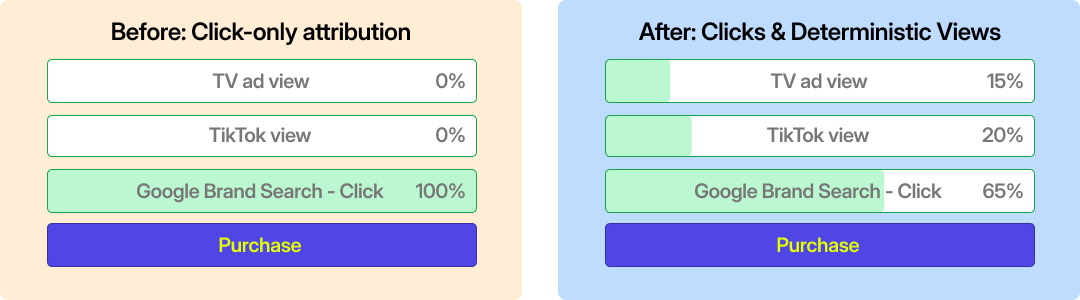
Before C&DV, a typical CTV-to-purchase path looked like this:
- CTV ad view: 0% credit
- Meta prospecting view: 0% credit
- Google branded search click: 100% credit
With C&DV:
- CTV ad view: proportional credit based on timing and channel role
- Meta prospecting view: proportional credit
- Google branded search click: still the strongest signal, but now sharing the story
For brands running CTV alongside Meta and Google, this changes how you interpret ROAS, how you defend channel budgets, and how you think about upper-funnel investment.
What this means for Vibe.co advertisers
Vibe.co customers already had access to strong performance data. Leading DTC brands running CTV through Vibe.co have cut CAC by 57% compared to social and seen 300%+ ROAS. But attributing that performance in a system that also captured Meta, Google, and email behavior required manual reconciliation or trust in platform-reported numbers, which is a known problem.
This integration changes that.
When you connect Vibe.co to Triple Whale and enable C&DV, your CTV impressions flow into the same attribution model as the rest of your media mix. You can see:
- How CTV ad views contribute to purchases that convert through other channels
- Where CTV sits in your customer journey relative to Meta, Google, and email
- Whether upper-funnel CTV spend is actually creating demand or simply appearing alongside organic intent
That last question is the one most media buyers can't answer today. Now they can.
Why this matters beyond attribution
There's a practical budget defense question here that every performance marketer faces.
CTV historically looks expensive when measured on last-click ROAS. The CPMs are higher than social. The conversion path is longer. And the click-through rates are structurally lower because viewers aren't holding a mouse. If your attribution model only credits clicks, CTV will always look like it underperforms.
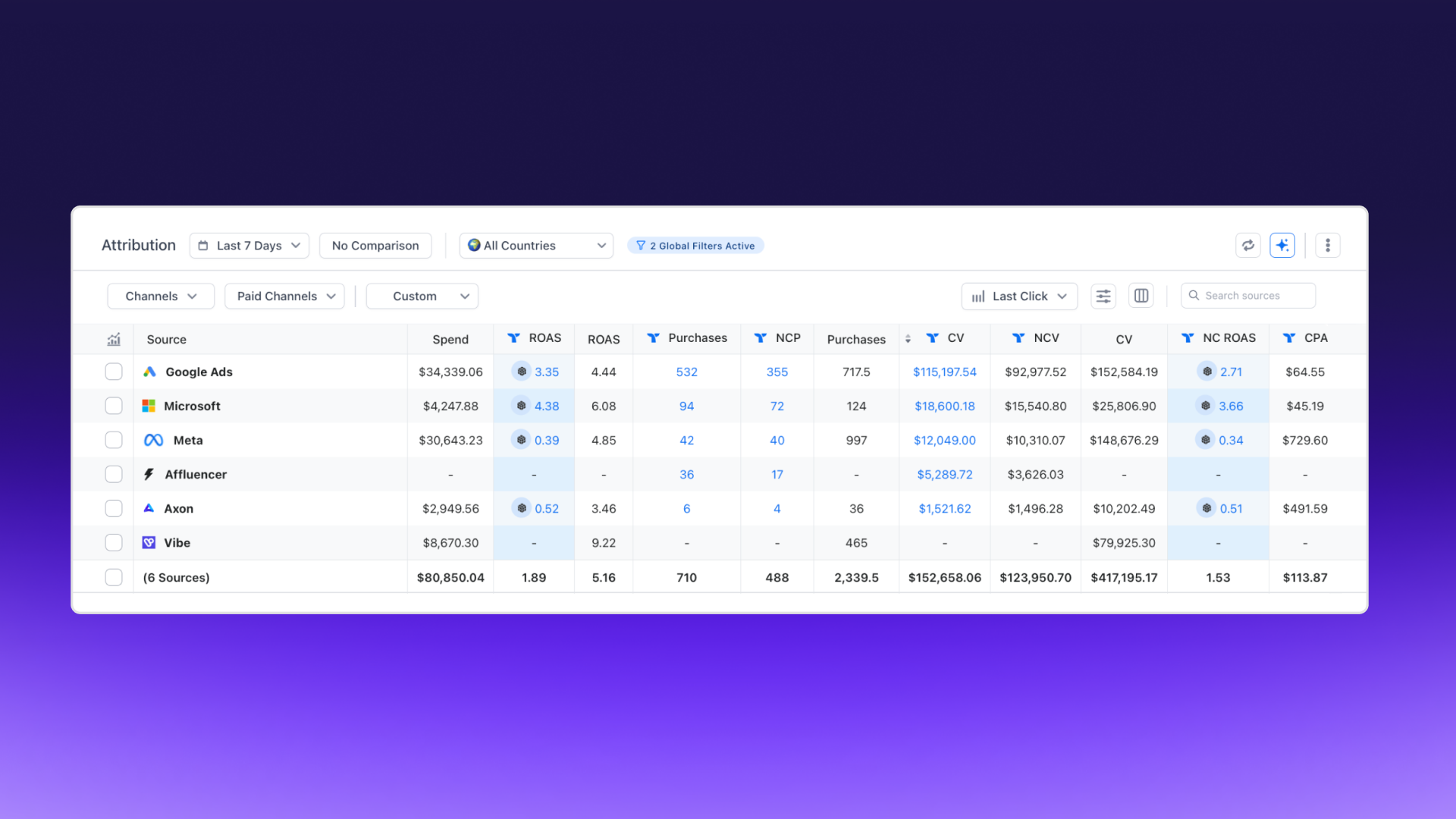
C&DV corrects for this. It shifts credit toward demand creation, which is exactly the job CTV is designed to do. That means brands can finally compare CTV, Meta, Pinterest, TikTok, and Google on fair terms, in a single dashboard, with revenue that adds up to what Shopify actually shows.
For Vibe.co customers running CTV as part of a diversified media mix, this is the measurement infrastructure the channel has needed.
How to get started
The integration is available now. Here's what to do:
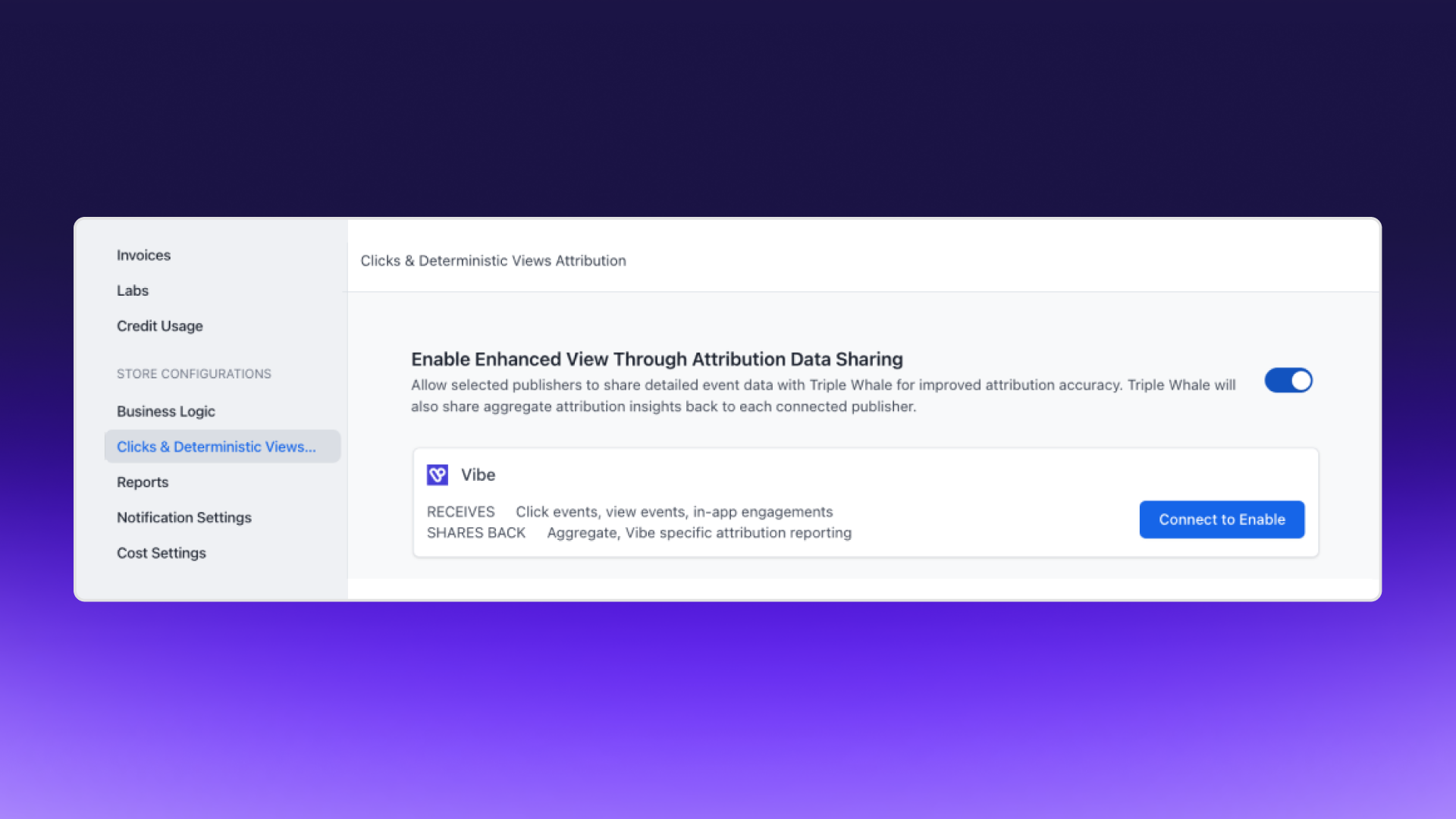
- Connect your Vibe.co account to Triple Whale through the integrations panel
- In your Triple Whale dashboard, go to Settings > Clicks & Deterministic Views Attribution > Enable Enhanced View Through Attribution
- Data starts populating within 48 hours
C&DV is available to all Triple Whale customers on a paid plan. If you're already a Vibe.co customer and new to Triple Whale, reach out to your Vibe CSM to get set up.
CTV attribution has been a black box for too long. This closes it.
Fairing on Vibe: post-purchase answers become CTV conversions
Fairing on Vibe: post-purchase answers become CTV conversions
Connect Fairing to Vibe so your streaming TV channels appear in your post-purchase survey, and the customers who credit TV come back as conversions.
Design in Canva, run on TV
Vibe is now the first CTV destination in Canva's publish menu. Design a video ad in Canva and publish it straight to your Vibe creative library.
Introducing Omnisend for Vibe
Sync Omnisend segments to Vibe and run them as Streaming TV audiences.
Introducing Vibe CLI
Run CTV campaigns from your terminal or coding agent with Vibe CLI. Query performance, launch campaigns, and script the repetitive work. Live now.
Introducing Stella for Vibe
Vibe now connects to Stella, so performance marketers can measure CTV with causal proof, not guesswork.

Get started with Vibe
in minutes.


Industries
© 2026 Vibe, Inc.