
RMS Beauty Builds Confidence to Scale CTV with Vibe and Triple Whale
Oct 14, 2026
At a glance
- CTV established as an incremental net new growth channel, with investment decisions guided by cross-channel measurement and demonstrated business impact in Triple Whale.
- Full-funnel CTV (prospecting, retargeting and awareness) built on RMS's own first party data
- Measured in Triple Whale with the same attribution models RMS uses for every other paid channel
RMS Beauty pioneered clean, mineral-based beauty years before the category existed. It was founded by makeup artist Rose Marie Swift at a time when few labs were set up to make beauty that way. Alejandra Tenorio, VP of Digital Marketing & eCommerce, owns the revenue P&L across DTC, Amazon and marketplaces like TikTok Shop, and has spent four years building RMS Beauty's growth stack.
The Opportunity
RMS Beauty already takes a full-funnel approach to paid media, efficiently capturing existing demand while investing in demand creation. The next opportunity was to extend that strategy even further upstream — reaching consumers before they entered a traditional digital shopping journey and meeting them in a high-attention environment: their TV screens. Alejandra wanted to test CTV, and she approached it with the discipline of a performance marketer. If RMS was going to put meaningful spend behind a new channel, the team needed to understand what CTV was contributing and hold it to the same standard as the rest of the mix. It had to show up in Triple Whale, where the team already relied on performance readouts for day-to-day optimization decisions.
“Our next phase of growth can't come exclusively from capturing existing demand. We have to create demand with the 95% of consumers who aren't actively shopping the category or haven't discovered RMS yet. CTV gives us another lever to reach those consumers, but the investment still has to be accountable to measurable business outcomes.”
Why RMS chose Vibe
RMS had three requirements for CTV: 1. It had to reach people who hadn't bought from the brand yet, 2. It had to run with the same control the team has on its other paid channels and 3. It had to show up in Triple Whale next to the rest of the mix. These three non-negotiables line up with the three value pillars Vibe was built on.
1. Identity Intelligence for Commerce: RMS's own customer data, used on TV
For RMS, CTV is how it reaches the 95% of shoppers still discovering the brand. This means that who a campaign leaves out, is as important as who it reaches.
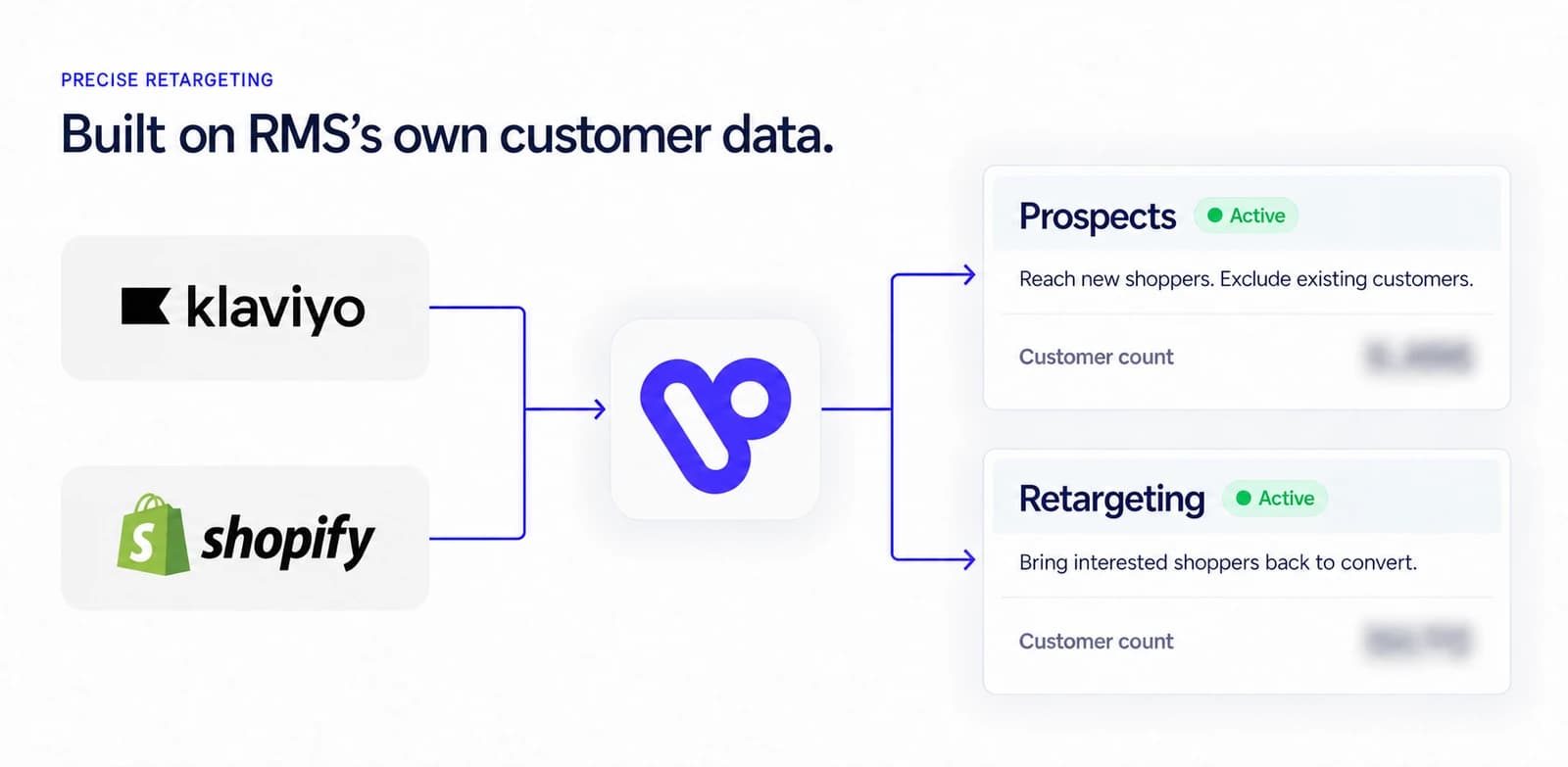
- Connected Customer Audiences: RMS brings its Klaviyo and Shopify data straight into Vibe. That makes CTV one more touchpoint in the same lifecycle program the team runs across its owned channels.
- Precise Retargeting: Klaviyo and Shopify data are layered together to exclude existing customers from prospecting and sales campaigns. Retargeting then re-engages shoppers who have already shown interest.
“The ability to activate our first-party customer data directly within Vibe was a key differentiator for us. It allows CTV to operate as an extension of our broader customer strategy—using the same intelligence to refine prospecting, manage exclusions and drive targeted re-engagement. The real power lies in owning the data and being able to activate it across channels.”
2. Performance Measurement: judged in the tools RMS already trusts
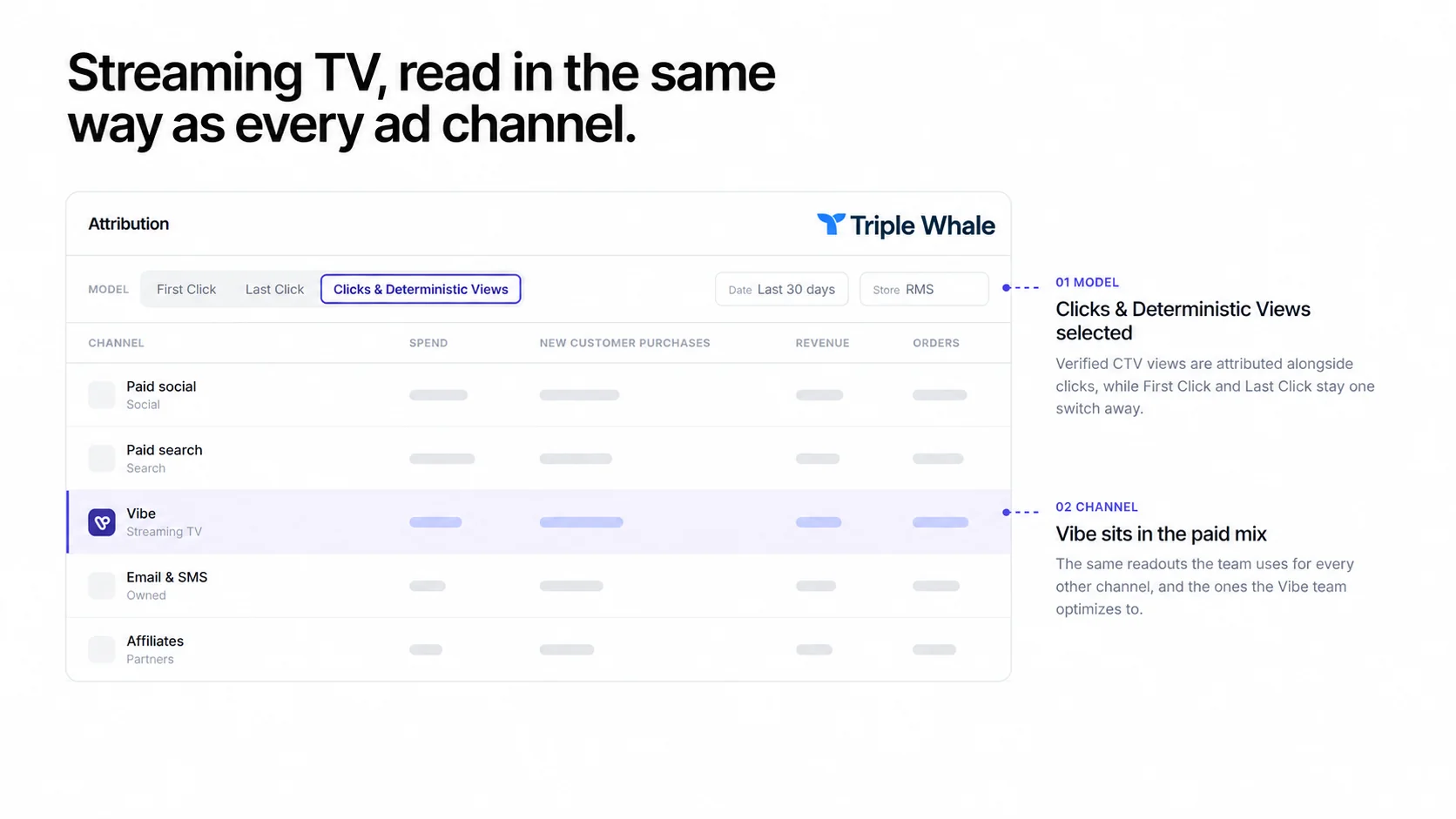
- Cross-channel measurement: RMS uses Triple Whale to understand performance, so Vibe's integration meant CTV could be evaluated through the same measurement framework from day one. From launch, the Vibe team built and optimized campaigns from Triple Whale's readouts, not Vibe's own platform numbers.
“A core requirement for any new channel is the ability to evaluate it within our broader measurement framework. Vibe's ability to integrate with Triple Whale and willingness to use our measurement as their source of truth means we're not evaluating CTV in isolation—we're looking at its contribution alongside the rest of the media mix and making investment decisions from a consistent set of performance signals.”
3. Platform Control & Agility: the way performance teams already work
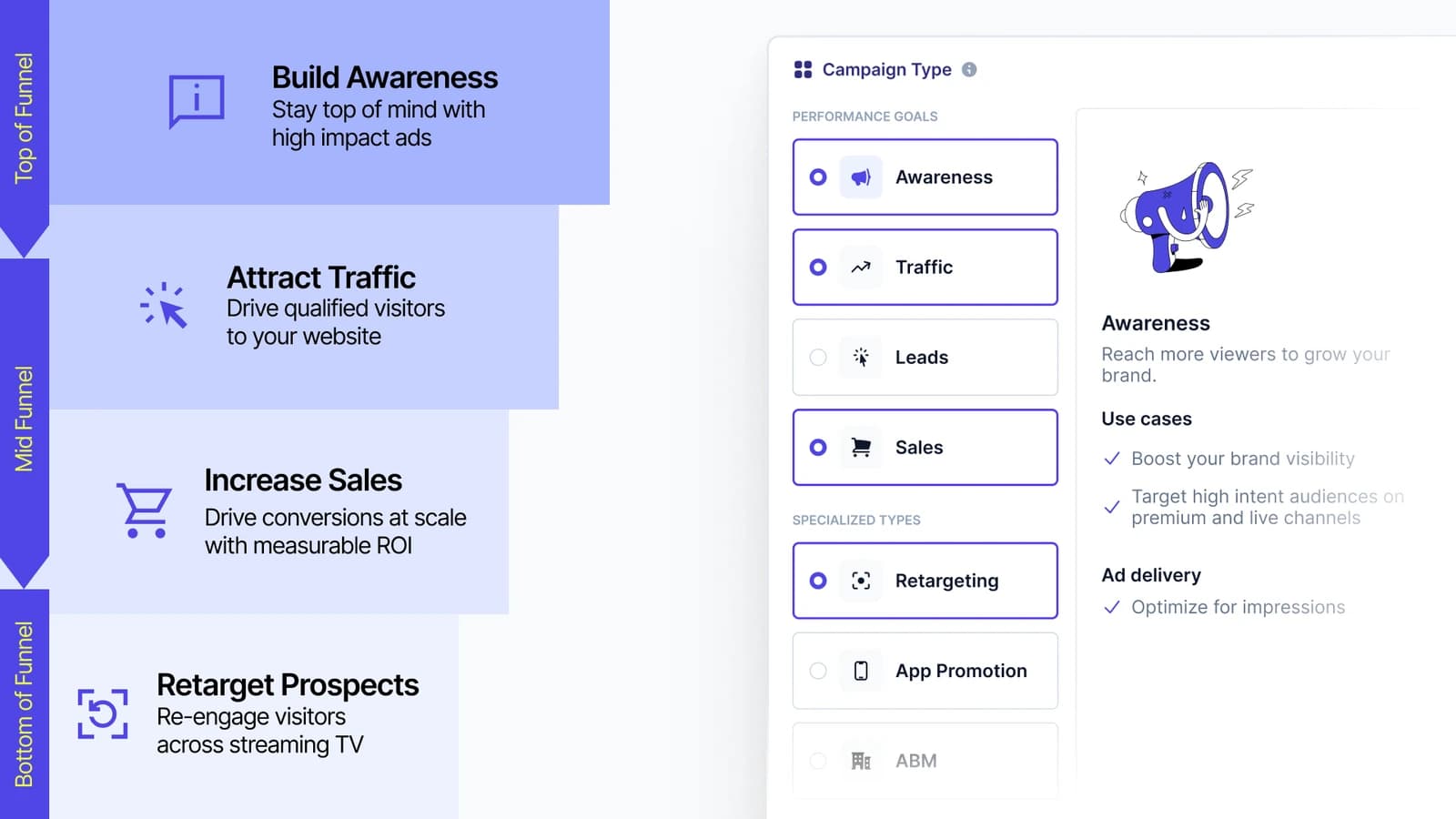
RMS's team runs paid on audiences, goals and optimization every day. Vibe brings that workflow to CTV. The team sets the goal, picks the audience, and moves across the whole funnel from one platform. That spans broad awareness, geo-targeting around retail doors, traffic campaigns and remarketing.
“What makes CTV compelling for us is its flexibility across the funnel. We can use it to build broad awareness, support acquisition and retargeting, or deploy geographically around key retail markets. That gives us the ability to connect digital investment more intentionally to both DTC and omnichannel growth.”
How RMS measures CTV
RMS Beauty takes a multi-model approach to measurement, recognizing that no single attribution methodology can fully capture a channel's impact across the customer journey. The team evaluates performance through different measurement lenses based on each channel's role in the funnel, from capturing existing demand to generating new demand. For CTV specifically, Clicks & Deterministic Views (C&DV) has helped RMS better understand Vibe's influence beyond the last click and quantify its contribution to downstream revenue.
“There isn't a single measurement model that tells the whole story. We move across Triple Whale's different attribution and measurement views depending on the question we're trying to answer — from understanding channel efficiency and conversion to evaluating incrementality and demand creation. That allows us to measure each channel against the role it's actually playing in the customer journey, rather than forcing every investment into the same attribution framework.”
What measurement confidence changes
For a performance team, confidence in a channel comes from having enough visibility to act on it. Because Vibe can be measured in Triple Whale with the rest of RMS's paid mix, every CTV decision starts from the same readouts Alejandra uses for every other channel. When the team needs to decide whether to scale, hold or adjust, the call is based on a cross-channel performance view in Triple Whale, and numbers the team already trusts.
“With Triple Whale, CTV stopped being a black box. We can understand how Vibe is contributing, learn what's working, and scale with confidence as the evidence builds.”
That matters most for a new channel. RMS doesn't have years of CTV history to benchmark against, so the team grows it step by step, testing how much further it can push and checking each step against new-customer acquisition. The measurement also shows the role CTV plays across the funnel. Alejandra can see where CTV creates demand and how the rest of the mix captures it, so the channel gets credit for the new customers it introduces, not only the last click. And because the Vibe team optimizes to those same Triple Whale readouts, everyone works from one set of numbers.
“Once we can evaluate CTV against the same business outcomes as the rest of the media mix, the question shifts from whether the channel works to how much incremental investment the economics can support. We use that measurement to validate that we're continuing to acquire new customers as we scale.”
The results
RMS introduced Vibe as a net-new channel this past spring. Today, it makes up a consistent share of RMS Beauty's paid mix. With CTV measured the same way as the rest of the mix, the team has a clear path to keep growing it.
What matters most to Alejandra goes beyond RMS's results. Any performance team can hold CTV to the same standard as the rest of its mix:
“The value isn't in proving that every channel works; it's in having the measurement discipline to understand what each channel is contributing. That gives us the confidence to invest when the economics support it—and the discipline to adjust when they don't.”