
How to Train Your Ads Before Black Friday (So You Actually Like What You Buy)
New survey data and 140 years of memory research show that what shoppers will want on Nov. 27 is taking shape now, and how to get ads that point you to exactly what you’re looking for.
By Arnaud Blanchard, Vice President of Product at Vibe
Black Friday lands on Nov. 27 this year. Much of what shoppers will want that day is taking shape right now.
It usually goes like this. An air fryer you looked up in October shows up in a feed on a Tuesday. Again during a streaming break on Friday night. Once more the following week. By Black Friday, you know which one you want and what a good price looks like.
For most people, that’s how discovery works now, and it mostly works. In a survey of 1,000 U.S. adults that we commissioned at Vibe, 74% of people who bought something they first noticed in an ad were satisfied with it every time or most of the time.
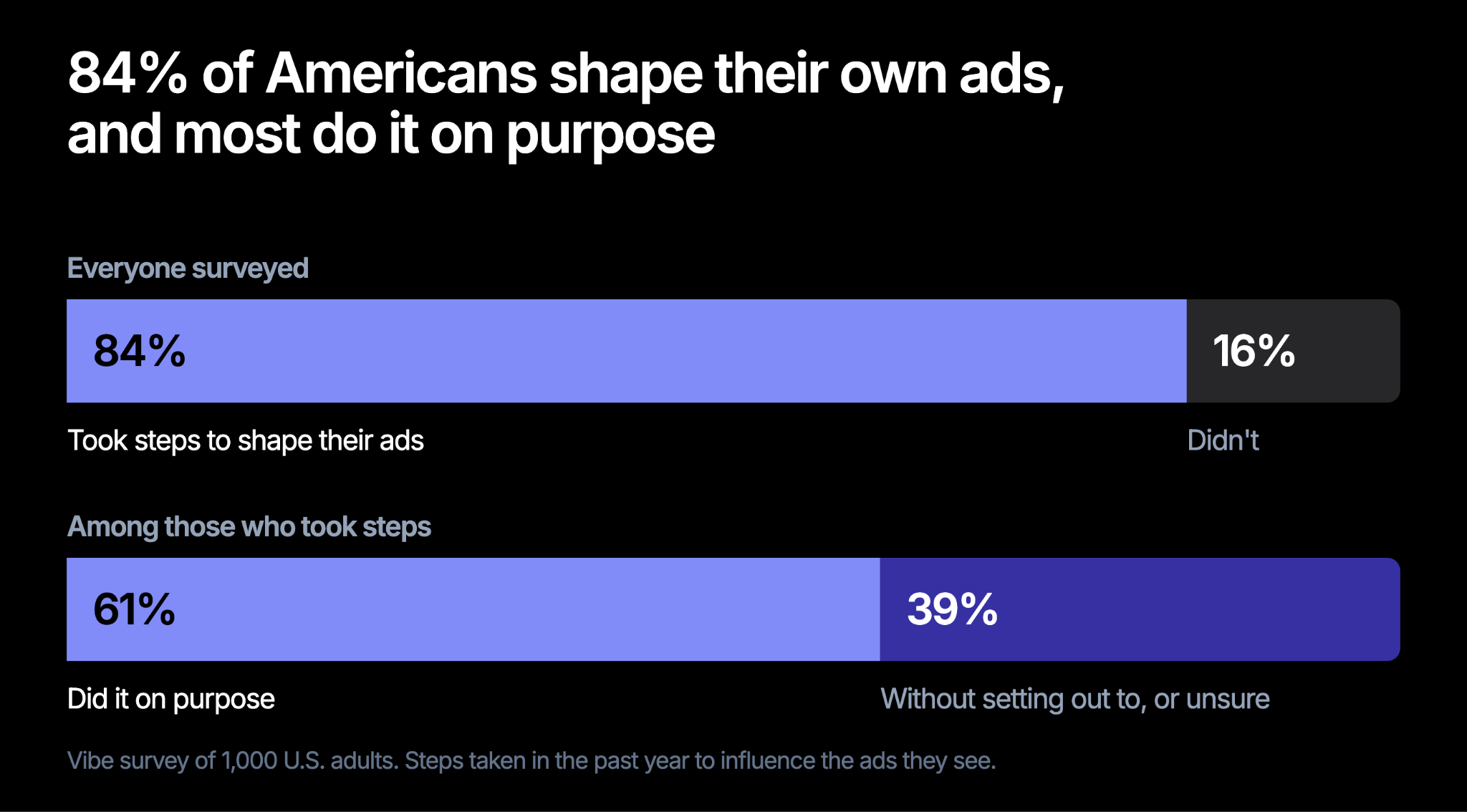
Most also try to steer it. 84% took steps in the past year to shape the ads they see, and 61% of them did it on purpose, roughly half of everyone surveyed. Those deliberate shoppers are more often satisfied with what they buy.
Why the weeks before Black Friday matter most
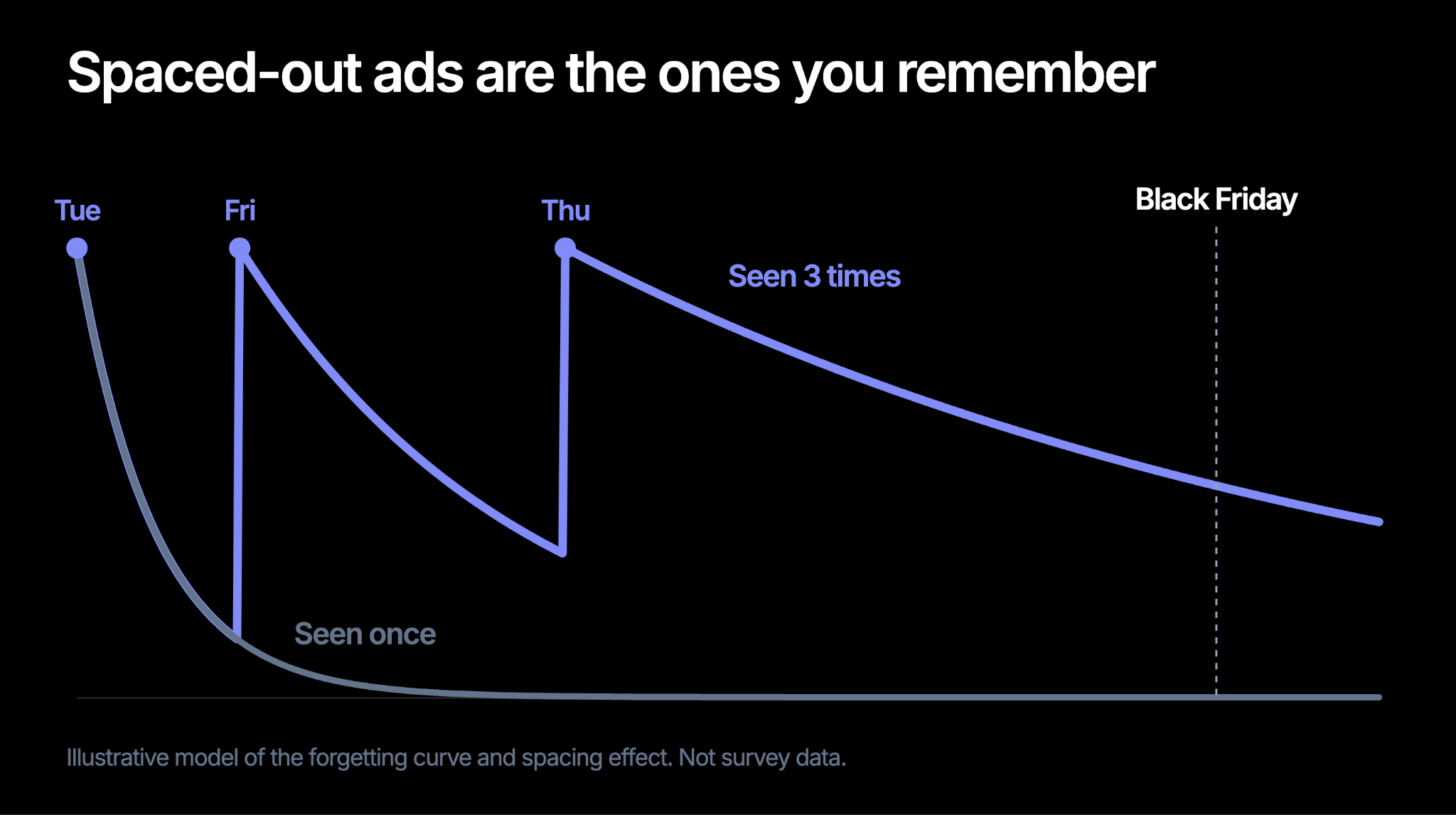
Most ads are forgotten almost as soon as they’re seen. In the 1880s, German psychologist Hermann Ebbinghaus memorized lists of nonsense syllables and tracked how fast they faded. By the next day, he had to relearn about two-thirds of them. One ad, seen once, rarely survives the week.
What sticks is repetition at the right moment. It’s the core of how we think about timing at Vibe, where we build the systems that decide when an ad runs. See something again too soon and nothing changes. Wait until it has partly faded, and the second look lands far harder. Psychologists call this the spacing effect. In a classic 1959 study, ads mailed every four weeks were remembered long after weekly ones had been forgotten, and more recent field experiments found people are more likely to buy when ads are spaced out rather than bunched together. Which pattern works better depends on when you need to remember, and Black Friday’s date is fixed.
Repetition has limits. Past a point, the same ad stops helping and starts to annoy. Timing matters more than volume.
That’s why, by the time the doorbusters arrive, many shoppers already know what they’re hoping to find.
Half of shoppers are already steering
Shoppers who take control do it in simple ways: browsing several stores’ websites for the same kind of product, searching for something more than once, or leaving an item in a cart they aren’t ready to buy. Nearly half of the people who tried tactics like these (48%) said their ads became more relevant.
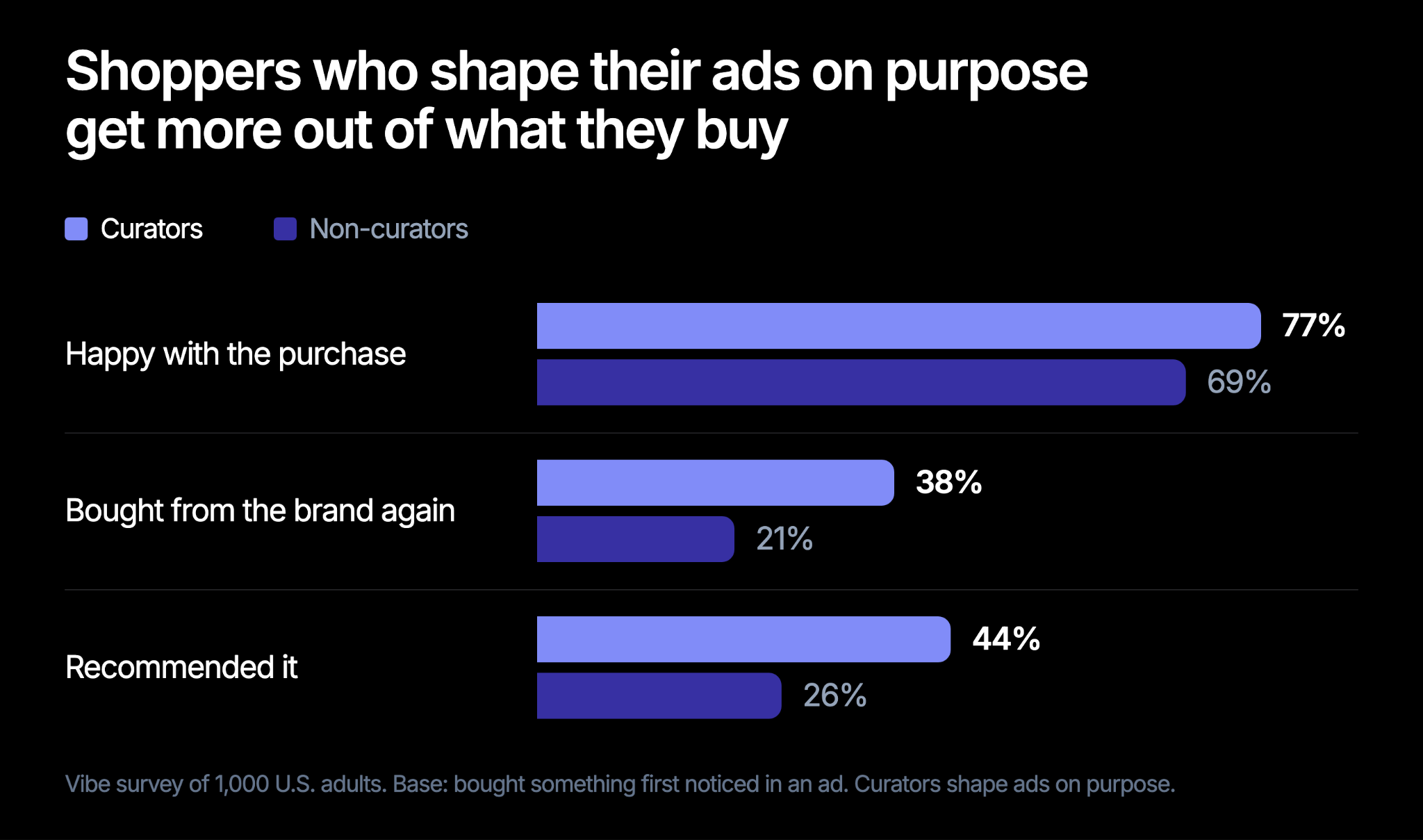
It shows up after checkout, too. The study calls these deliberate shoppers “curators.” Compared with “non-curators,” who took similar steps without setting out to shape their ads, curators were more often satisfied with things they first saw in an ad (77% vs. 69%) and nearly twice as likely to buy from the same brand again (38% vs. 21%). The survey doesn’t prove one causes the other, but it fits how memory works: when the ads people see reflect what they went looking for, what sticks is what they actually wanted.
A Black Friday countdown
Because memory works on a schedule, the smartest moves do, too. Prefer fewer personalized ads? The same settings let you turn them down.
- Now: show the algorithm what you want. Search for and browse what you actually plan to buy, spread over a few days rather than one binge.
- Two weeks out: write your list. Add the items you want to a wish list or cart. It sends a clear signal and gives you something to measure every deal against.
- The week before: line up your deals. Pay attention to the offers that keep showing up for things on your list. That’s the algorithm doing its job, and it’s your shortlist for the big day.
- Black Friday: buy with confidence. Start with your list. The ads you’ve been shaping for weeks should point you straight to the best deals on it.
The products that stick in shoppers’ heads this Black Friday will get there the same way the air fryer did: a few well-timed sightings over a few weeks. Spend a few minutes shaping your ads now, and what sticks will be exactly what you went looking for.
Vibe surveyed 1,000 U.S. adults via Pollfish who use ad-supported websites, search engines, social media platforms, video platforms, mobile apps or streaming TV services. Purchase outcomes reflect respondents who bought a product or service after first noticing it in an ad. Full methodology available here.

Which CTV Platform Works Best for DTC Brands?
Which CTV Platform Works Best for DTC Brands?
DTC brands need CTV that reduces CAC and shows up in Northbeam — not a separate dashboard. Here's what to look for and where Vibe delivers.
Which CTV Platform Works Best for E-Commerce Brands?
E-commerce brands need CTV that shows up in Northbeam and Triple Whale — not a separate dashboard. Here's what to look for and where Vibe delivers.
The Best CTV Advertising Platforms for Agencies, Ranked
Five CTV platforms agencies use for client work, ranked by supply model, measurement, and AI tooling. Vibe leads for performance-focused client portfolios.
Which CTV Platform Is Actually Built for Agency Work?
Agencies running CTV for clients need fraud-free inventory, transparent reporting, and stack integration. Here's what to look for and where Vibe delivers.
Which Streaming TV Ad Platforms Have the Best Audience Targeting?
Compare audience targeting capabilities across Vibe, Google DV360, The Trade Desk, Amazon DSP, and Roku Ads — with verified G2 scores for each.

Get started with Vibe
in minutes.


Industries
© 2026 Vibe, Inc.